

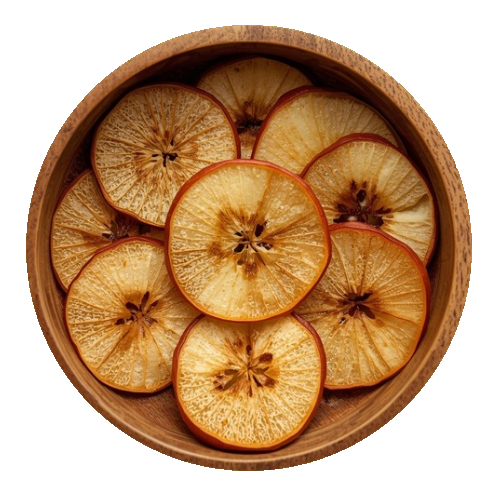
Dried Apple
We dry apples to preserve them, reduce waste, add value, and create versatile ingredients for the food industry—all while maintaining much of their nutritional and sensory quality.
| Nutrient |
Amount per 100 g |
|---|---|
| Calories |
240 kcal |
| Protein |
0.9 g |
| Total Fat |
0.3 g |
| Saturated Fat |
0.05 g |
| Carbohydrates |
63.9 g |
| Sugars |
57.2 g |
| Dietary Fiber |
8.7 g |
| Sodium |
6 mg |
| Potassium |
450 mg |
| Calcium |
20 mg |
| Iron |
0.9 mg |
| Vitamin C |
3 mg |
| Vitamin A |
4 µg |
* Dried apples are high in natural sugars and carbohydrates, since most of the water is removed.
* They provide fiber and micronutrients, but are more calorie-dense than fresh apples.
* Values can vary slightly depending on the drying method and whether sugar or preservatives are added.
Dried apples are a versatile raw material used in many food and beverage applications due to their concentrated flavor, long shelf life, and nutritional content. Here are the main ways dried apples can be used as a raw material across industries:
---
- Bakery & Confectionery
* Inclusions in baked goods: Added to muffins, breads, cakes, cookies, and pastries (either chopped or powdered).
* Fillings: Used in apple pies, turnovers, cereal bars, and pastries as a sweet, chewy filling component.
* Toppings: Rehydrated or chopped for decorating desserts and granola bars.
---
- Cereals, Snacks & Trail Mixes
* Breakfast cereals & granola: Dried apple slices or cubes add flavor, texture, and color.
* Trail mixes: Combined with nuts, seeds, and other dried fruits for a healthy snack.
* Snack chips: Sliced and crisped as standalone dried apple chips.
---
- Beverage Industry
* Tea blends: Used in fruit or herbal tea mixes for natural sweetness and aroma.
* Fermented beverages: Ingredient in ciders, fruit wines, or kombucha flavoring.
* Infused drinks: Added to water or spirits for flavor infusion.
---
- Food Processing & Ingredients
* Powdered form: Dried apples can be milled into apple powder for use in sauces, instant oatmeal, baby food, and baked goods.
* Flavor enhancer: Used to impart natural apple flavor in sauces, jams, yogurt, or dairy-based desserts.
* Rehydrated apple: Added to ready meals, fruit fillings, or chutneys.
---
- Nutraceuticals & Health Foods
* Natural sweetener: Apple powder is used as a sugar replacer in health snacks.
* Fiber source: Incorporated into dietary supplements or energy bars for digestive health.
* Clean-label products: As a natural flavoring and coloring ingredient in “no added sugar” foods.
---
- Animal Feed & By-products
* Dried apple residues can be ground and used in animal feed as a source of natural fiber and energy.
Drying apples serves several important practical, economic, and nutritional purposes. Here’s a clear breakdown of why apples are dried:
---
- Preservation
* Removes moisture — By reducing water content from about 85% to less than 15%, drying inhibits microbial growth (bacteria, yeast, mold) that cause spoilage.
* This extends shelf life from a few weeks (fresh apples) to several months or even years (dried apples).
---
- Storage & Transportation Efficiency
* Dried apples are lighter and smaller in volume, reducing packaging, transport, and storage costs.
* They don’t require refrigeration, which saves energy and logistics costs, especially for export.
---
- Economic Value Addition
* Drying allows farmers and processors to add value to surplus or lower-grade apples that might not sell fresh.
* It helps stabilize prices and provides an off-season product that can be sold year-round.
- Ingredient Versatility
* Dried apples can be used in many processed foods — cereals, bakery products, teas, and snacks.
* They serve as a base ingredient for apple powder, flakes, or concentrates in the food industry.
---
- Nutritional and Functional Benefits
* Drying concentrates nutrients (especially fiber, potassium, and natural sugars).
* Provides a quick energy source for snacks and trail mixes.
* Retains much of the natural flavor and aroma of fresh apples.
---
- Seasonal and Regional Availability
* Apples are seasonal, but drying ensures year-round availability of apple-based products.
* Dried apples can be stored and used when fresh apples are out of season.
---
- Waste Reduction
* Helps reduce post-harvest losses by using excess or cosmetically imperfect fruit that would otherwise be discarded.