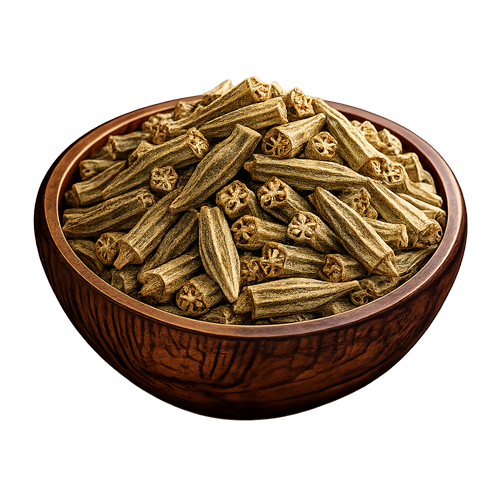
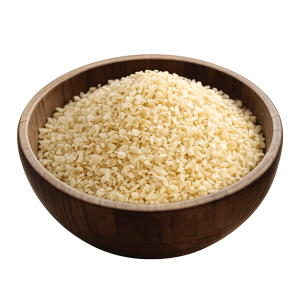
Dried okra is a versatile and nutritious ingredient often used in cooking or as a snack. It is made by dehydrating fresh okra, which preserves its nutrients and extends its shelf life.
Nutrient
Amount per 100 g
Calories
350 kcal
Protein
11.8 g
Total Fat
0.5 g
Carbohydrates
80 g
Fiber
15 g
Sugars
3 g
Vitamin A
450 IU
Vitamin C
6 mg
Calcium
230 mg
Iron
5.3 mg
Magnesium
150 mg
Uses
Cooking:
Rehydrate dried okra by soaking it in water for soups, stews, or curries.
Use as a thickening agent due to its natural mucilage.
Snacking:
Crunchy dried okra chips are a healthy alternative to potato chips.
Nutritional Benefits
Rich in dietary fiber, vitamins (A, C, K), and minerals (calcium, magnesium, potassium).
Low in calories, making it a great option for weight management.
Storage
Keep dried okra in an airtight container in a cool, dry place. Proper storage can maintain its quality for months.
Applications
Dried okra can be used in several ways as a raw material, particularly in culinary and industrial applications.
Food Industry:
Culinary uses: Dried okra can be rehydrated and used in soups, stews, curries, and gumbo. It can also be ground into a powder and used as a thickening agent in dishes.
Snacks: It can be roasted or fried to make a crispy, healthy snack, often seasoned with various spices.
Okra flour: Dried okra can be ground into flour and used as an ingredient in gluten-free baking or to thicken sauces and soups.
Cosmetics and Pharmaceuticals:
Okra extract: The mucilage in okra is known for its moisturizing properties and can be extracted for use in cosmetics, such as lotions and skin creams.
Health supplements: Dried okra can be processed into supplements due to its nutritional value, such as fiber, vitamins, and antioxidants.
Animal Feed:
Dried okra can be used in animal feed as a high-fiber supplement, especially for livestock and poultry.
Industrial Uses:
Biodegradable packaging: Research is being done on using okra's mucilage for developing biodegradable packaging materials.
Natural fibers: The fibrous structure of okra pods can be processed for use in the production of biodegradable textiles or ropes.