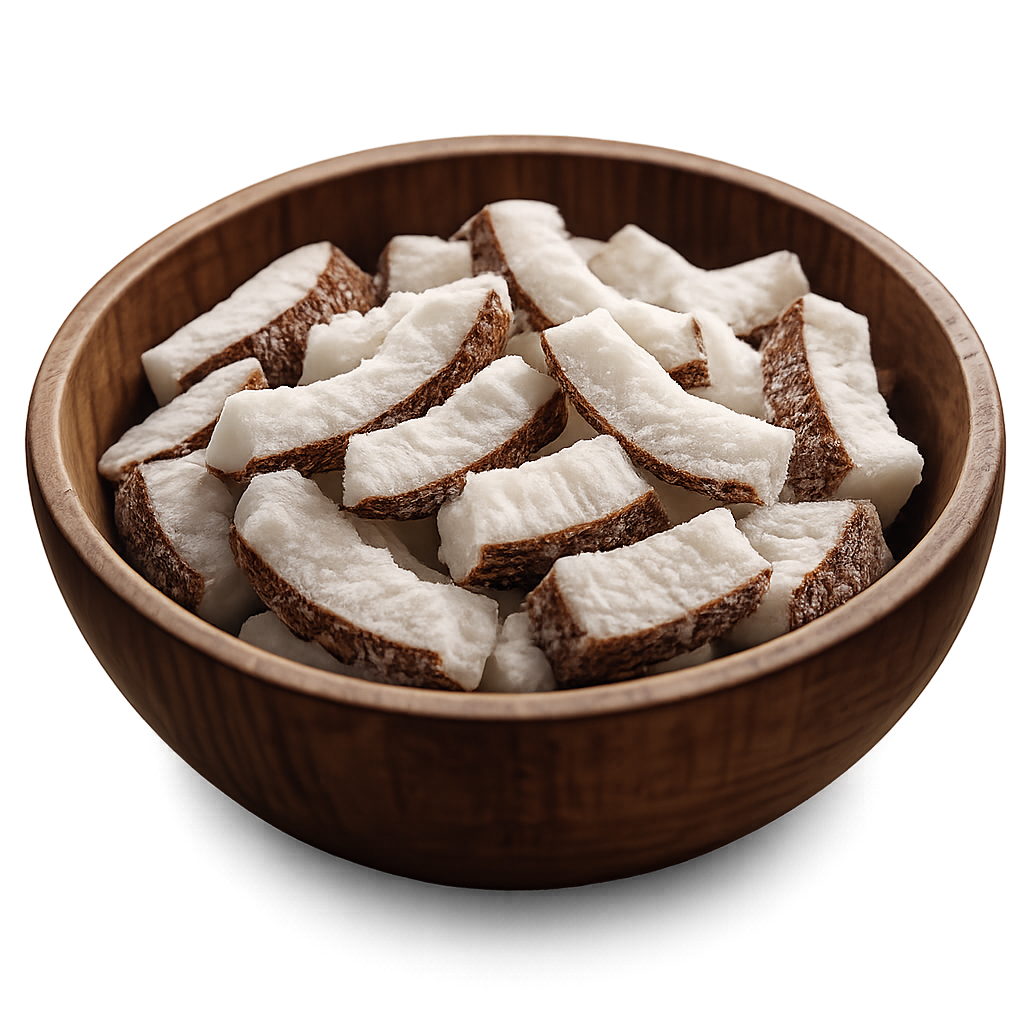
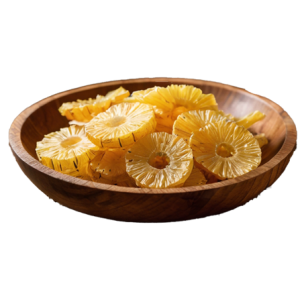
Dried coconut , is a very popular snack and It is commonly used in cooking and baking for its rich flavor and chewy texture.
Nutrient
Amount per 100 g
Calories
660 kcal
Protein
6.9 g
Total Fat
64.5 g
Saturated Fat
57.2 g
Carbohydrates
23.7 g
Sugars
7.4 g
Dietary Fiber
16.3 g
Cholesterol
0 mg
Iron
3.3 mg
Sodium
37 mg
Calcium
26 mg
Magnesium
90 mg
Potassium
543 mg
Vitamin C
1.5 mg
Dried coconut , is a very popular snack and It is commonly used in cooking and baking for its rich flavor and chewy texture. Depending on its preparation, dried coconut can come in various forms:
Shredded Coconut: Thin, long strips of coconut flesh.
Flaked Coconut: Larger, flat pieces.
Grated Coconut: Fine, powdery consistency, often used in desserts or curries.
Coconut Chips: Thicker slices, typically used as a snack or garnish.
Uses of Dried Coconut:
Baking: Used in cookies, cakes, and bread.
Cooking: Added to curries, rice, or stews for texture and flavor.
Snacking: Eaten plain, toasted, or coated with sugar or spices.
Smoothies: Adds flavor and creaminess.
Applications
Dried coconut, is used as raw material in various industries. Here’s how it can be utilized:
Food Industry
Coconut Oil Production: Dried coconut is the primary raw material for extracting coconut oil, used for cooking, baking, and as a health supplement.
Desiccated Coconut: Shredded or grated dried coconut is used in baked goods, confectioneries, and desserts.
Coconut Flour: Made by grinding dried coconut meat into a fine powder, it’s a gluten-free alternative for baking.
Snack Items: Toasted or sweetened dried coconut is a popular ingredient in snacks.
Cosmetics and Personal Care
Skincare Products: Coconut oil derived from dried coconut is used in lotions, creams, and soaps due to its moisturizing properties.
Hair Care Products: It is a key ingredient in shampoos, conditioners, and hair oils.
Industrial Applications
Biofuels: The oil extracted from dried coconut can be used to produce biodiesel.
Soap Making: Coconut oil from dried coconut is a major ingredient in soap production due to its high saponification value.
Activated Carbon: Coconut shells, a by-product of dried coconut processing, can be converted into activated carbon for filtration.
Agriculture
Animal Feed: The residue after oil extraction, known as coconut cake or copra meal, is a nutritious feed for livestock.
Organic Fertilizer: Coconut husk and copra residue are used as organic fertilizers or compost.
Pharmaceuticals and Health Products
Dietary Supplements: Coconut oil is used in capsules or as a standalone supplement for its health benefits.
Medicinal Oils: Certain medicinal oils use coconut oil as a base for their formulations.
Artisan and Handicrafts
Coconut Shell Products: While not the dried coconut itself, its shells can be repurposed into decorative items, utensils, and crafts.
Coir Products: The husk of the coconut can be processed into coir, used for ropes, mats, and brushes.