

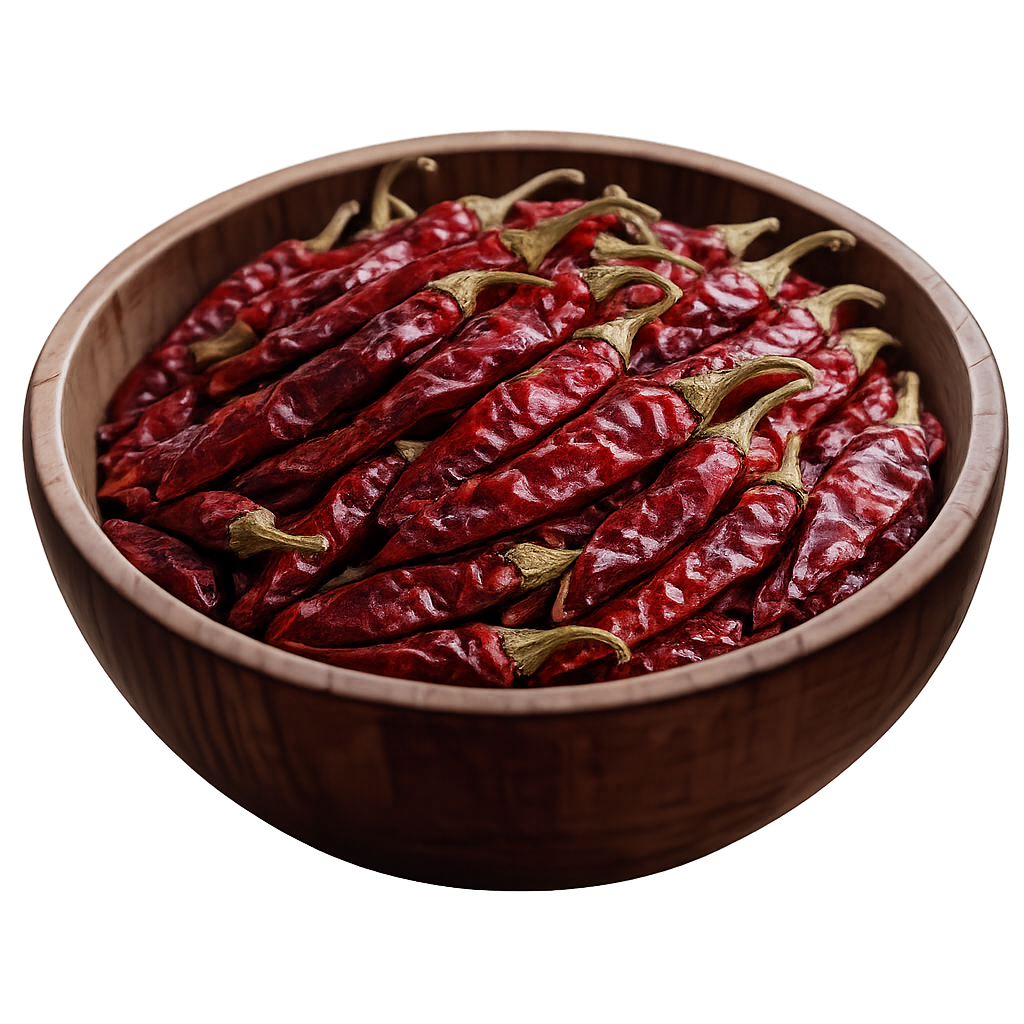
Dried Paprika
Dried paprika is a spice made from ground, dried peppers. It comes in various types, depending on the variety of peppers used, such as sweet, hot, or smoked paprika. The spice is widely used in cuisines worldwide to add color, flavor, and a mild to strong heat to dishes.
| Nutrient |
Amount per 100 g |
|---|---|
| Calories |
282 kcal |
| Protein |
14.14 g |
| Total Fat |
12.89 g |
| Saturated Fat |
2.14 g |
| Monounsaturated fat |
2.14 g |
| Polyunsaturated fat |
6.94 g |
| Carbohydrates |
54.94 g |
| Fiber |
34.9 g |
| Sugars |
10.34 g |
| Water |
8.3 g |
| Vitamin A |
24660 IU (high in beta-carotene) |
| Vitamin C |
0.9 mg |
| Vitamin E |
29.1 mg |
| Vitamin B6 |
2.14 mg |
| Folate |
49 µg |
| Calcium |
229 mg (supports bone health and muscle function) |
| Iron |
21.14 mg (important for oxygen transport in the blood) |
| Magnesium |
178 mg (helps with muscle and nerve function) |
| Phosphorus |
314 mg |
| Potassium |
2280 mg (helps with fluid balance and blood pressure regulation) |
| Sodium |
68 mg |
| Zinc |
4.3 mg (supports immune function) |
Types of Dried Paprika:
- Sweet Paprika: Mild, slightly sweet, and adds vibrant color without intense heat.
- Hot Paprika: Spicier, with a more robust flavor, often made from chili varieties.
- Smoked Paprika (Pimentón): Smoked over wood fires, adding a rich, smoky depth.
Common Uses:
- Seasoning for meats, stews, and soups (e.g., goulash, chili).
- Sprinkled on eggs, hummus, or roasted vegetables.
- Rub for grilling meats or barbecue.
- Ingredient in spice blends like Cajun or taco seasoning.
Dried paprika can be used as a raw material in a variety of applications, depending on the industry or purpose. Here are some common uses:
- Culinary Applications
- Spice and Seasoning: Ground into powder for use as a key ingredient in spice blends (e.g., chili powder, curry mixes, or barbecue rubs).
- Flavoring and Coloring: Added directly to dishes for its distinctive taste and vibrant red color.
- Infused Oils and Sauces: Used to flavor oils, dressings, marinades, and hot sauces.
- Food Processing Industry
- Flavor Enhancer: Incorporated into processed foods like sausages, soups, snacks, and ready-to-eat meals.
- Natural Food Coloring: Used as a colorant in products like cheese, chips, or baked goods.
- Cosmetics and Skincare
- Natural Pigment: Extracted for use in natural cosmetics as a coloring agent.
- Antioxidant Properties: Utilized in skincare products for its antioxidant benefits (rich in vitamins C and E).
- Pharmaceuticals and Nutraceuticals
- Capsaicin Extraction: Some paprika varieties are used to extract capsaicin, which has medicinal properties and is used in creams, pain relievers, or dietary supplements.
- Vitamin-Rich Supplements: High in vitamins and antioxidants, dried paprika can be processed into capsules or powders for health benefits.
- Agricultural Use
- Animal Feed Additive: Used as a natural color enhancer in poultry feed to deepen the color of egg yolks and chicken skin.
- Industrial Applications
- Natural Dye: Paprika pigments are used to dye fabrics, paper, or other materials in eco-friendly ways.
- Craft and Artisanal Products
- Decorative Uses: Used whole or ground in craft projects for creating natural textures and colors.